Saturday, October 7, 2017

Top 5 Android smartphones of fall 2017

by Brandon Russell | October 7, 2017

As the smartphone war heats up, finding the right one for you can be tough. If you want clean software, go with Google. If features are your priority, the Note 8 soars above the rest. Here's the truth we can all (mostly) agree on: Everything is good.

We've reached peak smartphone this year, with every company from LG to Samsung option for more powerful guts, sleek glass designs, and edge-to-edge displays. The fact that everything is good is great news for consumers—whatever you purchase will fulfill your needs.

If you have no brand loyalty, we have five Android picks for you to consider as you shop around. Stay tuned as we eventually pick our smartphone of the year. Note that these are in no particular order.

Google Pixel 2 XL

Google's latest features the best-in-class camera, front-facing speakers, squeezable frame, and a gorgeous 6-inch display—and that's not even the whole story. Pixel owners will get three years of guaranteed OS and security updates, as well as integration with Google's expanded lineup of gadgets, including the brand new Pixel Buds.

Pixel 2 XL details

Specs:

  • 6-inch display
  • Snapdragon 835 processor
  • 3520 mAh battery
  • 12.2-megapixel camera
  • Android 8.0
  • 4GB of RAM
  • 64GB or 128GB of internal storage
  • Price: $849
  • Samsung Galaxy S8

    It's hard to fathom the Galaxy S8 came out nearly six months ago—an eternity in tech time. Yet it remains this year's standout release, combining an elegant design with a terrific camera. The result is a phone that features the best all-around experience, with things like great battery life, wireless charging, and excellent software. It's the closest thing to perfect we've seen all year.

    Galaxy S8 review

    Specs:

  • 5.8-inch display
  • Snapdragon 835 processor
  • 3000 mAh battery
  • 12-megapixel camera
  • Android 7.0 Nougat
  • 4GB of RAM
  • 64GB or 128GB of expandable storage
  • Price: $725
  • LG V30

    The LG V30 hasn't received the attention it deserves. Outfitted with a 6-inch display and one of the most robust camera experiences out there, LG's flagship ticks every box you'd want from a flagship. Not to mention it features a gorgeous design and one of the most beautiful displays we've ever laid eyes on. Don't let this one slip under the radar if content creation is among your top priorities.

    LG V30 camera samples

    Specs:

  • 6-inch display
  • Snapdragon 835 processor
  • 3300 mAh battery
  • Dual 16-megapixel camera setup
  • Android 7.1.2 Nougat
  • 4GB of RAM
  • 64GB of expandable storage
  • Price: $800
  • Galaxy Note 8

    If you like the Galaxy S8 but want a dual-camera setup and S Pen, the Galaxy Note 8 is for you. With a 6.3-inch display, S Pen, and Edge Sense features, the Note 8 offers the most expansive experience of any smartphone, combining top-notch productivity features with elegant software. And it gets killer battery life. Finally, all remnants of last year's Note 7 recall appear to be gone once and for all.

    Galaxy Note 8 review

    Specs:

  • 6.3-inch display
  • Snapdragon 835 processor
  • 3300 mAh battery
  • Dual 12-megapixel camera setup
  • Android 7.1.1 Nougat
  • 6GB of RAM
  • 64GB of expandable storage
  • Price: $929
  • OnePlus 5

    You won't find a better combination of hardware, software, and price than with the OnePlus 5. Sure, the device's design is almost verbatim of the iPhone 7 Plus, but it manages to stand out thanks to its premium experience and affordable price of admission. You don't need 8GB of RAM in a phone, but the OnePlus 5 gives it to you anywhere.

    OnePlus 5 review

    Specs:

  • 5.5-inch display
  • Snapdragon 835 processor
  • 3300mAh battery
  • Dual 16-megapixel and 20-megapixel camera setup
  • Android 7.1.1 Nougat
  • 6GB or 8GB of RAM
  • 64GB or 128GB of internal storage
  • Price: $479

  • Source: Top 5 Android smartphones of fall 2017

    Friday, October 6, 2017

    Moto G5S Plus review: Steadily advancing on flagship territory, but it's not clear why

    It's been a few years since the Motorola that we knew and loved was replaced by what I like to call Lenovorola. Gone are the quick updates, Moto Maker, and a lot of other things that made Motorola great; instead, we now have a ton of different models, super slow (or potentially nonexistent) updates, and strange-looking camera bumps.

    But after using the Moto G5S Plus, I've warmed up a bit to Lenovo's Motorola. It's not perfect, but it's definitely usable as a daily driver, even for someone who typically uses flagship phones. The gap between the mid-range and the high-end is rapidly shrinking, and Motorola is jumping on that wave with the G5S Plus. Unfortunately, the combination of an inferior camera and a significant price hike make this phone a bit hard to recommend without its current discount.

    Design and display

    Six months ago, the Moto G5 Plus added a metal body, but it... well, it was ugly. There were no real contrasting elements on the back, making it look like some sort of mutant one-eyed fish. The S (which is supposed to stand for "special edition," by the way) adopts the generic metal-bodied design that devices like the older HTC One series and OnePlus's products use, and though it isn't anything special in that respect, it looks good. There are chamfers around both the front and rear, adding to the premium feel.

    Looking around the phone, the G5 Plus owners among you may notice that the layout for buttons and slots is actually different. The headphone jack has been relocated to the top, and the microSD/nanoSIM slot to the left. Plus, there's now a dedicated speaker on the bottom, instead of the earpiece combo unit used on the standard G5. On the right side, we still have a textured power button sitting below a volume rocker. And on the bottom, we sadly still have a microUSB port. It works, of course, but in a world where almost every other phone is getting Type-C, this is an issue.


    Up front is a 5.5-inch 1080p LCD display, which is the same size as the one on the G4 Plus before (Motorola went with a 5.2-incher on the G5 Plus this year). This one is topped by 2.5D glass, adding a premium feel. I only have good things to say about it; colors look good but aren't oversaturated, viewing angles are excellent, and it gets very bright, making outdoor use a pleasure. It's no Samsung AMOLED display, but at least you won't have to deal with burn-in issues like I do on my Galaxy S8+.

    Oh, and we can't forget about the fingerprint sensor that sits right below the display. It's as good as a fingerprint sensor can get: easy to set up and quick to read. Plus, you can enable something called "One button nav" in the Moto app, which I'll get deeper into in a bit.

    Camera(s)

    Take one look at the back and you'll notice something interesting, especially for a mid-ranger: dual cameras. This is traditionally a flagship thing, but the tech is trickling down the market. Both sensors come in at 13 megapixels, and the dual sensors are used to create depth-of-field shots. On paper, this may sound like a big upgrade, but I'd much rather have one really good sensor than two subpar ones. Allow me to explain.

    It all starts with the double-twist to launch, which is convenient as always, but the G5S Plus's camera is a bit slow to launch. When your viewfinder comes to life, you're greeted with a simple interface. Shots come out decently in regular light, but that's true of any phone camera these days. The big differentiators are the smaller things.

    In regular use, I've found that the camera is prone to glare, especially if your lens is dirty (which it tends to get easily, thanks to the hump). It also frequently overexposes shots; this isn't a huge deal if you manually adjust the focus/exposure, which I usually do anyway. However, focusing takes a while, as there's no laser autofocus or dual pixel autofocus system like the G5 Plus had on board. At least the shutter is near-instant - that is, as long as you're not in low-light mode.

    left: G5S Plus. right: Pixel.

    And when you are, Motorola's low-light mode is virtually useless, as it not only requires a significantly longer time to take and process pictures, but also produces images that generally don't look any different. I took a shot in low-light mode that took forever to process, but taking the same shot in regular mode was near-instant, with little to distinguish the results. Either way, low-light images still come out darker and noisier than the camera on something like the Pixel - unfortunate, but expected for the price range.

    left, middle: Depth-enabled. right: Normal.

    Oh, and that second camera? It can produce a bokeh effect, but it's really nothing that you couldn't do in Google Camera's Lens Blur mode. Even when maxed out, you still can barely tell that the image was taken with two sensors. Plus, it takes a while to shoot, so you'd better have steady hands. Yes, the dual cameras are a good marketing bullet for Motorola, but I'd much rather the company have taken the time and effort to improve the main camera's quality overall instead.

    Performance and battery

    Like the G5 Plus, the G5S Plus has a Snapdragon 625, as well as 32GB and 64GB storage variants. But this time around, the 32GB model comes equipped with 3GB of RAM (1GB more than the G5 Plus's 32GB model); the 64GB stays with the more-than-adequate 4GB. My review unit is the 4GB/64GB version and has been very smooth overall, and I don't imagine the 3GB/32GB model being noticeably slower.


    The Snapdragon 625 is perfectly suited for duty in this phone. Apps open quickly with smooth animations, and I really haven't noticed slowdown anywhere other than the camera. The 4GB of RAM in my unit does a great job of keeping a bunch of apps in memory, but I'm sure that the 3GB model would be sufficient in this regard as well. I'd say the only thing to watch out for is gaming performance; the Adreno 506 GPU just isn't very powerful, and it's noticeable in 3D benchmarks. For comparison's sake, the Pixel scores a 2331 in 3DBench; that's much, much higher than the G5S Plus's 464. Casual games should obviously be fine, but it's the heavier 3D titles you should watch out for.

    Thanks in part to that Snapdragon 625, the G5S Plus and its 3000mAh battery have no problem getting through a day on a full charge. Of course, that's also attributed to the 1080p display and light skin. My use consists of social media, texting, web browsing, and some light gaming on mostly LTE and some WiFi, with occasional Bluetooth use. I was able to get between six and seven hours of screen-on time every day, which is squarely above average. This isn't an endurance champion, but it'll power you through a full day, and then some.

    Charging is still done through a microUSB port, unfortunately. I get that it's so that people with microUSB cables aren't left in the dust, but come on; adapters are cheap, good USB-C cables are readily available, USB-C is already the mainstream, and it's just infuriating whenever you plug the microUSB cable in upside-down. Even much cheaper phones have USB Type-C these days. Motorola really needs to get with the times.

    Software

    I have very few complaints about the software on the G5S Plus. After all, it's pretty much just stock Android with Motorola's helpful additions sprinkled on top. It's also almost exactly the same as the G5 Plus's software, so if you know what that's like, feel free to skip this section entirely. In fact, the only difference I can see is a new ring around the software home button. But long story short: I like it a lot.

    The launcher that Motorola opted for is a skinned version of Launcher3 with elements of the Pixel Launcher, such as the removal of the app drawer button and the "Search Apps" function in the drawer. The Google feed is even supported. But unlike the Pixel Launcher, there's no permanent Google pill or weather/date display. Motorola does include its signature circular widget that combines battery level, weather, time, and date into one compact, aesthetically-appealing package, so I've been using that. I also appreciate being able to turn the screen off just by holding down on the fingerprint sensor, as the power button sometimes isn't readily accessible.

    Motorola's helpful additions are virtually all found in one central place: the Moto app. Here, they're grouped into two sections - Moto Actions and Moto Display. For Moto Actions, "Chop Twice for Flashlight" and "Twist for Quick Capture" are both familiar to Motorola devices, and they work as well as ever. I had an issue with the flashlight not turning on at all during my test period once, but a reboot fixed it. "Pick up to stop ringing" and "Flip for Do Not Disturb" are also pretty self-explanatory. "Swipe to shrink screen" lets you swipe from around the middle of the display to the bottom left or right corners to minimize it, but I feel like that gesture just doesn't make sense, as many people scroll down in that fashion.

    What I found really interesting was the "One button nav" feature, which takes your three default Android navigation keys away and transforms them into gestures on the fingerprint sensor. This isn't new, but it's surprisingly good. To go home, you simply tap on the sensor. To go back, you swipe left on it, and to go to your recent apps, you swipe right. It's very straightforward, and very clever. Plus, if you keep holding on the sensor even after you get the vibration that indicates you can let go to put the phone to sleep, you activate Google Assistant. I'd say that the only downside is not being able to hold the recent apps button down to start multi-window, though that's not a huge deal. This system will take you maybe a day to acclimate to, and then you'll wonder how you've been living with all the lost real estate that software keys take up for all these years. It's that intuitive.

    Moving on to the Moto Display section, there are only two options: Night Display and Moto Display. Night Display is Motorola's version of Night Light, and it really needs no introduction or explanation. Choose a specific start time and an end time, or have it activate based on sunrise and sunset. Moto Display is engaged when you move the phone, and a widget similar to the one on the homescreen comes alive with your battery level, the time, and the date. It's handy, but I miss the dedicated sensors on other Motorola phones that allowed you to just wave your hand over the screen to trigger it.

    I only have one legitimate complaint, and that has to do with multi-window. It seems like Google and Samsung are the only OEMs that allow for window resizing, and that needs to change. For instance, if I'm watching a YouTube video on top and scrolling through Facebook on the bottom, I'm forced to have YouTube take up half the screen despite the video being in 16:9. And while it might not seem like closing that gap would add any additional usable space, it makes reading whatever's on the bottom a whole lot easier.

    I suppose I'm also concerned about how long it'll take for this device to get Oreo given how slow updates have been since Lenovo took over, but that's another story.

    Conclusion

    The Moto G5S Plus is much more of an evolution than a revolution, but that's what we expected given the "S" branding. It brings a nicer metal design, an excellent display, smooth performance, a long-lasting battery, and close-to-stock software. The only real downside is the camera; the bokeh effect is a novelty, and it could use some work in the speed and low-light departments. In fact, I'd go as far as to call it a downgrade from the G5 Plus's due to the loss of dual pixel autofocus, which is very unfortunate.

    Like with the G5 series, we're not getting the standard G5S stateside. The 5.5" display might be a little big for some, but I personally think the size is just right. My review unit is the $349.99 4GB/64GB model, but if it were my money and I had to have a G5S Plus, I'd go for the cheaper $279.99 3GB/32GB model. 3GB is enough RAM for a device of this nature, and the 32GB can be expanded upon with a microSD card (I have a 128GB card in mine).

    This is still $50 more than the G5 Plus's pricing for both 32GB and 64GB models, which is a steep climb for a nicer exterior, a larger display, an extra gigabyte of RAM on the base model, and an arguably inferior camera. But as a launch promo, both storage tiers are $50 off, effectively making them the same prices as the slightly older model. That might sound like a good deal on paper, but the fact that Lenovo feels the need to discount a brand-new phone right out the gate this significantly really says something about its confidence in the MSRP. Perhaps it realizes that the $349.99 model is stepping on the toes of the $400 Moto Z2 Play.

    If you need to purchase a phone now and can get that launch discount, I'd recommend the 3GB/32GB model at $229.99, but otherwise, I'm not so sure. The G5 Plus, which is still only half a year old, can be had for as low as $179.99 when sales are being run. Plus, there's still no NFC to be found, which is outrageous on this device in particular. I really don't understand why something that costs a few bucks can't be included on a device that is steadily moving upmarket, as evidenced by its $50 price hike.

    I'm used to having flagship devices as my daily drivers, and despite its faults, I must say that the Moto G5S Plus gives the feel of a much more expensive phone. Of course, that can be attributed to the upmarket rise of the Moto G line. I used a Moto G4 Plus for a few weeks about a year ago and found it very impressive, but the G5S Plus takes it to a whole other level. If this thing had a better camera and better graphics performance, it might be staying in my pocket for another few weeks.

    You can grab a Moto G5S Plus of your own from Best Buy, B&H, Newegg, or Motorola's site.


    Source: Moto G5S Plus review: Steadily advancing on flagship territory, but it's not clear why

    Thursday, October 5, 2017

    Look At All The New Flagship Smartphones

    SmartphonesThere must be something in the air. Maybe it's something in the water. How else do you explain all the new smartphones showing up at about the same time every year?

    It's the season of discontent. Whatever we bought last year needs to be made older and unsightly this year so this year we get new smartphones; plenty of smartphones, more smartphones than you could easily compare or contrast, and more than you can find in any store. Here's my list of the flagships.

    Yes, I know that most of us have dozens of applications on our smartphones these days; social media apps, email, browser, photo management, games, but high on the list of bragging rights is the camera. What kind of photos can you take with the latest and greatest camera? That's what we want. Oh, and big screens. Apple invented the big screen smartphone, you know?

    Flagship smartphones carry very similar features these days. High resolution displays, high resolution cameras, fast processors, and, uh, um, batteries, fingerprint sensors and facial recognition, a few buttons, some waterproofing, and, well, speakers and microphones.

    In other words, all the good phones are much like each other.

    Sales – Samsung is the industry leader among flagship smartphone makers, but the Galaxy line of premium phones does not equal what Apple will sell in iPhones. After that, no other manufacturer comes close. It's a race for third place.

    Displays – Smartphone screens come with a few basic considerations. OLED vs. LCD. PPI (pixel density) vs. Resolution. Size vs. case size. Samsung's Galaxy Note 8 has the largest screen size; half an inch larger than iPhone X. The smallest screen among new smartphones is iPhone 8 at 4.7-inches and Google Pixel 2 at 5-inches.

    The pixel density race belongs to Sony Xperia YZ Premium at 807 PPI vs. Samsung's Galaxy S8 at 567 PPI. Apple's iPhone X trails to the middle with 458 PPI. Samsung owns the so-called screen-to-body ratio, thanks to ultra thin bezels, and a small chin and forehead. iPhone X is pretty close. Google Pixel 2 decided to take up residence with iPhones of the past among the lowest. Ditto for Samsung having the most models with the lowest thickness. Or, highest thinness. All iPhones are among the heaviest models.

    Waterproof – Apple claims IP67, a standard for dust and water resistance, but LG and Samsung models rate higher.

    RAM & SSD – For whatever reason, RAM bragging rights matter to some, and are totally ignored by others. OnePlus 5 has 8GB RAM while iPhone 8, 8 Plus, and X have 3GB RAM. RAM specifications just are not what they used to be. Pentium, anyone? Storage options are across the board, but Apple is the leader of the pack. Most new smartphones start with a minimum of 64GB SSD storage, but only Apple goes to 256GB, most others only to 128GB though some models have removable SSD storage.

    CPUs – Apple rolls their own with the A11 Bionic in iPhone 8, 8 Plus, and X, but elsewhere its either Samsung, Qualcomm, or a cheap knockoff. The winner? Apple. Nothing else is close.

    Cameras – They all have cameras, front and back (or, is it back and front?). Cameras can be measured in megapixels and for some, like GHz, that still matters. It doesn't. What matters is the actual photo or video. Apple remains in love with 12MP sensors on the back (I'm sure it's the back) and a measly 7MP on the front, but it doesn't matter. iPhone 8 and 8 Plus rank among the highest smartphone cameras in nearly any test. Samsung's are excellent. Even Google's new Pixel 2 models score high. The Sony Xperia YX Premium has 720p HD video at 960fps slo-mo. New iPhone 8 models and iPhone X do 1080p HD at 240fps.

    Battery – From what I can tell, batteries in today's smartphones are measured two ways. Total capacity in mAh. It doesn't matter. All that counts is how long the battery will last during your day.

    Conclusion – When it comes to hardware, Apple is a middling player except when it comes to CPU performance, camera performance, and storage options, where it excels. When it comes to price tag, Apple excels at the high end with iPhone X reading one dollar short of $1,000, and the Galaxy Note 8 about $60 less, Google Pixel 2 XL at $50 less, and every other maker and model for notably less. Interestingly, iPhone 7, which was new until a few weeks ago, is among the least expensive.

    Charles McLellan has all the details about each one with some lists and graphs. No mention is given to the most important factor among specifications. Software. iOS vs. Android.


    Source: Look At All The New Flagship Smartphones

    Wednesday, October 4, 2017

    Google to launch flagship Pixel 2 XL smartphone in Singapore with Singtel on Nov 15, pricing yet to be revealed

    SAN FRANCISCO - For the first time ever, Google's flagship Pixel 2 XL smartphone will be available in Singapore. The search giant made the announcement at its annual hardware event in San Francisco early Thursday (Oct 5)  morning Singapore time. 

    The new 6-inch smartphone will be available here on Nov 15 in an exclusive partnership with Singtel. It is also the first time that a Google Pixel smartphone will be available in South-east Asia.

    While local pricing has not been announced, consumers here can register their interest in the device at singtel.com/googlepixel from 9am on Thursday (Oct 5).

    In addition, a localised version of Google Assistant that can understand Singlish will be launched later this year. 

    Google also plans to sell its new Pixel Buds wireless headphones here, though its local pricing is unknown. This wireless Bluetooth earbuds come with built-in Google Assistant and Google Translate features. 

    However, the smaller, 5-inch Pixel 2, as well as other newly revealed Google hardware devices, including a 2-in-1 convertible Chromebook and a smaller Google Home Mini smart speaker, will not be available in Singapore. 

    Both Pixel smartphones come with either 64GB or 128GB of internal storage and run the latest Android 8.0 Oreo mobile operating system. They sport a revamped home screen launcher that places the search bar near the bottom of the screen instead of the top. 

    New to the Pixel phones is the ability to squeeze the sizes of the phones to trigger the Google Assistant. Dubbed Active Edge, it is similar to the Edge Sense feature introduced by the HTC U11 earlier this year. 

    The original Pixel had one of the best smartphone cameras last year, despite not having a dual-camera system. This camera was snappy and produced excellent high dynamic range (HDR) photos, thanks to an automatic HDR mode in its software. 

    The new Pixel 2 phones, however, are bucking the trend of equipping a dual-camera system. Instead they have a 12 mega-pixel rear camera with optical image stabilisation (OIS) to aid in taking photos in low-light conditions, and electronic image stabilisation (EIS) for more stable, less jerky videos. 

    More importantly, the camera on the new Pixel phones has topped the smartphone camera category rated by review website DxOMark with a score of 98. In comparison, the original Pixel scored 90 while the recently-launched iPhone 8 Plus and Galaxy Note8 scored 94. 

    Like its rivals, the Pixel camera supports a Portrait Mode feature that blurs the background while taking photos. The difference is that it uses machine learning instead of a second camera to achieve the effect. The front-facing camera, too, is able to take Portrait Mode selfies. 

    Exclusive to the Pixel smartphones at launch is the Google Lens feature, which can intelligently extract relevant information from images taken by the Pixel phone. For instance, it can pick up dates and timings to add to Google Calendar, or to scan a business card to add a phone contact. It is currently integrated with Google Photos as an option in the Photos app. Google says it will expand Lens to other devices in the future. 

    Music lovers will appreciate the built-in music recognition feature called Now Playing - think Shazam. The Pixel phones will identify the song and display it on their lock screens. 

    The Pixel phones have an always-on ambient display, like the ones on the Samsung Galaxy S8 and Note8 devices, that shows notifications. 

    Google has also ditched the 3.5mm headphone jack for its Pixel phones, a year after making fun of Apple for removing the headphone jack on the iPhone 7. Included with the phones is an adapter for the headphone jack. 

    The Pixels are rated at IP67 for water and dust resistance, which means they can survive unscathed when submerged in water of about a metre deep, for up to 30 minutes. This is an upgrade over the older IP53-rated Pixel phones that are merely resistant to splashes.  

    PRICING AND AVAILABILITY

    Google has yet to reveal the Singapore pricing of the Pixel 2 XL, though consumers here can get it at the same time as everyone else around the world on Nov 15.

    In the United States, the Pixel 2 XL costs US$849 for the 64GB (S$1,149) model and US$949 (S$1,284) for the 128GB model. 

    The Pixel 2 is priced at US$649 (S$878) for the 64GB version and US$749 (S$1,014) for the 128GB model. It will be available on Oct 19. 

    GOOGLE PIXEL BUDS

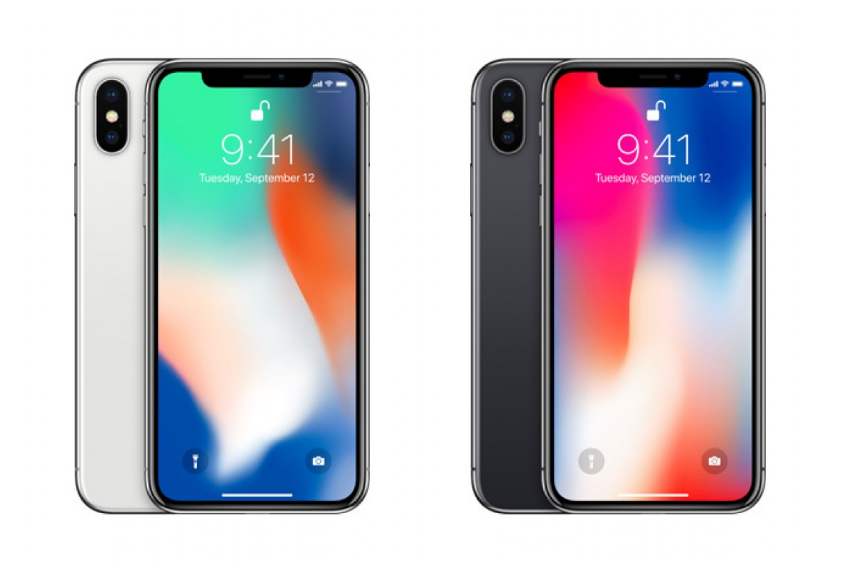
    A press image for the Google Pixel 2 XL phone in black and white (left) and the Google Pixel Buds wireless headphones in a charging case. PHOTO: GOOGLE
    Google also announced a pair of wireless Bluetooth headphones, the Google Pixel Buds. Unlike Apple's AirPods, Google's earbuds are not fully wireless - there is a connecting cable that links the two earphones together and lets you hang it on the neck when not in use.

    A touchpad on the right earbud lets you answer calls, adjust the volume without reaching for the phone. More importantly, those with a paired Android Nougat device can tap this touchpad to ask the Google Assistant for help, from walking directions to sending a text. Google Assistant can also read out your messages and alert you to new notifications.

    With a Google Pixel phone, the headphones also support a real-time translation feature powered by Google Translate. The headphones will pick up what you say, and play the translation in the desired language using the Pixel's speakers. Meanwhile, you will hear the translation of the other person in your ear via the Pixel Buds. It currently supports 40 languages.

    Google says that a single charge will provide up to 5 hours of listening. Its carrying case also charges the Pixel Buds, and holds sufficient charges for the headphones for up to 24 hours of listening time. 

    It will be available for US$159 (S$216) in November.

    Another new accessory that was announced, but unavailable in Singapore is the latest Google Daydream View headset. This US$99 (S$136) virtual reality (VR) headset now comes in new colours with upgraded lens. Google says that there are over 250 VR apps for the headset. 

    OTHER GOOGLE HARDWARE 

    In addition to its Pixel phones, Google also revealed the high-end Chromebook Pixelbook, a 2-in-1 convertible that runs on its lightweight Chrome operating system. 

    This 12.3-inch device can switch between tablet and laptop forms by flipping its flexible hinge. It has a dual-tone design that measures just 10mm thin and weighs around 1kg.

    New features include an easy way to connect to a Pixel smartphone for mobile tethering, as well as support for Google Assistant, which is a first for a laptop. 

    It also comes with an optional stylus called the Pixelbook Pen, which is sold separately at US$99 (S$136). Google says that the pen offers over 2,000 levels of pressure sensitivity and is responsive with low latency. 

    It is powered by Intel Core processors and will come with 128GB, 256GB or 512GB of internal storage, with prices starting at US$999 (S$1,360). Pixelbook will be available in the US, Canada and UK from Oct 31.

    Google has announced a smaller version of the Google Home smart speaker, a just a week after Amazon refreshed its Alexa-powered Echo smart home speakers and devices. 

    The new Google Home Mini is a fabric-covered, pebble-like, voice-activated speaker that comes with Google Assistant to help you with the latest weather and traffic updates, as well as control other smart home devices. It is priced at US$49 (S$67) and available in stores starting Oct 19 in Australia, Canada, France, Germany, Japan, UK and the US.

    Last week, Google Home received an update that lets users set one-off and recurring reminders by speaking to it. This feature is also enabled for the Mini version.  

    For those who are more particular about audio, there is a new Google Home Max smart speaker that offer better audio quality than the standard Google Home. 

    Google Home Max can adapt to your environment thanks to its Smart Sound feature, which uses machine learning to tune the audio dynamically. It supports popular music streaming services such as Spotify and YouTube Music.

    Like Home, it comes with Google Assistant built-in. It will be available at US$399 (S$543) in December in the US, with more countries to follow next year. 

    Finally, Google showed off Google Clips, a small standalone hands-free camera that uses machine learning to capture photos and video snippets for you at the right candid moment. It can be attached to a various surfaces and objects. Users can choose which video clips or photos to save to their phones. It will be available soon at US$249 (S$339). 


    Source: Google to launch flagship Pixel 2 XL smartphone in Singapore with Singtel on Nov 15, pricing yet to be revealed

    Tuesday, October 3, 2017

    Samsung to Make Huge Revenue through iPhone X than its Own Flagship Phone

    Apple is selling the iPhone X with a starting price of $999. The Cupertino company will not only benefit from the sales of iPhone X, but also Samsung which its major rival will also reap good profits from its sales. According to a new report on The Wall Street Journal, the South Korean company earns around $110 when each unit of iPhone X is sold.

    A recent market analysis by the Counterpoint Technology Market Research has revealed that Apple is expected to sell around 130 million units of iPhone X until the summer of 2019. If Apple manages to sell these many units of iPhone X, it is certain that Samsung will also make huge money by the sales of the most advanced smartphone from Apple.

    As far as the sales analysis of Galaxy S8 is concerned, Samsung is expected to sell around 50 million S8 units in a timeframe of 20 month since its launch in April. The South Korean company's component division will be getting $202 from the sale of each Galaxy S8 unit. This suggests that iPhone X will bring around $4 billion in revenue to Samsung's component division than the Galaxy S8. The component division of Samsung earned 35 percent of the firm's $195 revenue in 2016.

    Read More: iPhone X Shipments May Begin in February or March Due to Its Production Issues

    Ming-Ch Kuo who had accurately predicted $999 pricing of iPhone X had revealed earlier that Samsung is charging around $120 to $130 for each OLED panel that goes into the iPhone X. This amount is around $75 more than what the Cupertino company is usually paying for LCD panels that it uses on other iPhones.

    Currently, Samsung is the sole provider of OLED panels for iPhone X. Apple wants the South Korean company to manufacture OLED panels in a certain way to house the notch present at the iPhone X. This has reportedly result in production problems that is reportedly delaying the iPhone X's arrival to the market.

    Recent reports have revealed that the Apple is exploring other options for OLED screens. Some reports have revealed that LG Display may provide OLED panels to Apple. Also, the Cupertino company is also rumored to build its own OLED manufacturing factory. A recent report has revealed that Apple may use the Full Active LCD panels from Japan Display (JDI) for iPhones. JDI is also expected to provide OLED panels to Apple in 2019.

    Meanwhile, Samsung seems to be making good revenue through the sales of iPhone X and also through its own flagship phones such as Galaxy S8, Galaxy S8+ and Galaxy Note 8.

    (source)


    Source: Samsung to Make Huge Revenue through iPhone X than its Own Flagship Phone

    Monday, October 2, 2017

    The last remaining mystery about Google's new Pixel phones just leaked

    On Monday, gadgets leaker Evan Blass leaked a photo supposedly showing the front of the Pixel 2 XL from his Twitter account @evleaks. 

    ...and without a case pic.twitter.com/4QrvyM9Hro

    — Evan Blass (@evleaks) October 2, 2017

    With this latest leak, it looks like both the front and back of the Pixel 2 XL have been revealed. Just last week, Blass leaked photos that supposedly showed the back half of Google's upcoming Pixel devices. Add on top of that all the detailed rumors about the Pixel 2 and Pixel 2 XL specs and features, and we have a pretty good idea of what Google will announce during its October 4 event. 

    This latest photo reinforces rumors that the Pixel 2 XL will get a premium design overhaul with slimmer bezels around the display. It also appears that the display's corners have been rounded to keep up with the modern design on recent flagship smartphones from Samsung, LG, and Apple.

    Blass leaked another photo on Twitter showing the supposed Pixel 2 XL at an angle, clad in a case. From the photo, it doesn't look like the display itself is curved as the rumors suggested. Instead, it looks like the glass front panel itself curves into the phone's edges, like the iPhone 8's front panel. 

    Google Pixel 2 XL, encased pic.twitter.com/GvZZadmZZg

    — Evan Blass (@evleaks) October 2, 2017

    No photos of the regular Pixel 2's front have leaked yet, but most of the rumors suggest that it'll look similar to the original Pixel's design.

    Google PixelThe Pixel 2 is said to have the same overall design as the original Pixel (above). Hollis Johnson/Business Insider

    According to an earlier leak from Android Authority, Google's new Pixel phones will have:

  • A quad-HD (QHD) 1440p display on the Pixel 2 XL
  • A full-HD (FHD) 1080p display on the Pixel 2
  • Both will run on the powerful Qualcomm Snapdragon 835 processor
  • Both will have water resistance up to IP67, similar to the iPhone 8
  • No 3.5mm headphone jacks
  • Dual speakers on both phones
  • Both will feature an "active edge" that lets you squeeze the devices to pull up certain apps
  • Both phones will come with 64GB and 128GB storage options
  • Google is hosting an event on October 4 where it's expected to announce its new Pixel 2 smartphones. Until then, we don't know for sure whether or not the photos and rumors accurately represent the Pixel 2 smartphones.

    Business Insider will be at Google's event Wednesday with live coverage of all the announcements. 

    Get the latest Google stock price here.

    SEE ALSO: A new leak makes Google's larger Pixel 2 XL smartphone sound a lot like the Samsung Galaxy Note 8 NOW WATCH: Everything we know about Google's upcoming smartphone, the Pixel 2
    Source: The last remaining mystery about Google's new Pixel phones just leaked

    Sunday, October 1, 2017

    First look: Nokia 8 flagship smartphone

    100,000 Bonus Qantas Points + Lounge Passes - AMEX Qantas Ultimate Ad

    Receive 100,000 bonus Qantas Points when you apply online by 2 October 2017. No cap on earning Qantas Points. Annual Complimentary Qantas domestic return economy flight every year. Receive two American Express Airport Lounge entries each calendar year. T&Cs. Minimum spend applies. Click here now.

    Finnish company HMD Global has unveiled its latest Nokia-branded smartphone in a first bid to win over Samsung and Apple customers.

    The Android-powered Nokia 8 will be available in September and will retail for a global average price of €599 (US$703), HMD said Wednesday.

    The company, which started operating in 2016 with an exclusive license for Nokia-branded phones, has so far focused its efforts to revive the Nokia brand on cheaper smartphones and a redesign of the classic Nokia 3310, first sold in 2000.

    Juho Sarvikas, HMD's chief product officer, said now was "the perfect time" to introduce the model, which he describes as a flagship product.

    The phone will feature a "dual-sight" photo and video function, in which images from the front and rear cameras will be displayed simultaneously on a split screen. HMD describes the feature as "less Selfie, more Bothie".

    HMD had chosen to release cheaper models first because 50 percent of global demand was for phones costing between €100 and €250, Sarvikas said in an interview.

    "We wanted to start there, where we know that we are highly relevant with our proposition. We're very eager to enter the flagship segment as well."

    New optics

    The new device has Zeiss cameras, after HMD said in July that it had signed a partnership with the group, part of the German optics company Carl Zeiss.

    The launch comes as Apple prepares to launch a new iPhone and Samsung rolls out its new Galaxy Note 8. Sarvikas said by phone that HMD was "less concerned about competition; we're here to design for the consumers."

    Demand for the redesigned 3310 feature phone, unveiled in February, had been "very strong." Sarvikas was unable to share detailed sales figures but said HMD had sold "millions" of smartphones and "tens of millions" of feature phones – of which the 3310 is just one model.

    Nokia sold the handset business to Microsoft in 2014. In 2016 Microsoft sold it to HMD and FIH Mobile, a subsidiary of Chinese phone maker Foxconn Technology. HMD's Chief Executive Officer Arto Nummela, a former Nokia executive, left the company last month.


    Source: First look: Nokia 8 flagship smartphone